
Home vs Public EV Charging – Which is Best?
If you drive an electric vehicle in the UK today, the short answer is home EV charging is almost always cheaper and more convenient, while public EV charging is faster and essential for long journeys, but significantly more expensive.
Which is “best” depends less on the car you drive and more on where you live, how far you travel, and whether you can charge at home.
This article explains the real-world differences between home and public EV charging in Britain in 2025, including costs, pros and cons, and practical alternatives for drivers without a driveway.
Chapters
At a Glance
- Home EV charging is typically 3-6× cheaper per mile than public rapid charging
- UK home electricity is taxed at 5% VAT, public charging at 20% VAT
- Public EV charging is vital for long trips but can rival petrol costs
- Drivers relying only on public EV charging lose much of the EV cost advantage
- Charger sharing platforms like Joosup offer a cheaper middle ground
- There is no single “best” option – the right choice depends on access, mileage and lifestyle
Why Driving an EV is Still Cheap
Despite the recent introduction of road tax for EVs and the upcoming pay-per-mile tax from 2028, driving an electric vehicle can still be cheaper than petrol or diesel – but only under certain conditions.
The biggest factor is where you charge.
EVs remain mechanically simpler, cheaper to service, and far more energy efficient than internal combustion engine cars.
Even in 2025, an electric motor converts over 85% of energy into motion, compared to roughly 30% for a petrol engine.
However, that efficiency advantage is increasingly undermined if you rely on public EV charging alone.
Public charging prices have risen sharply due to wholesale electricity costs, grid upgrades, land rents, and 20% VAT.
As a result, some EV drivers now find their “fuel” costs approaching, or occasionally exceeding those of petrol cars.
So while EVs can still be cheap to run, charging behaviour now matters more than ever.
Energy Prices – A British Problem
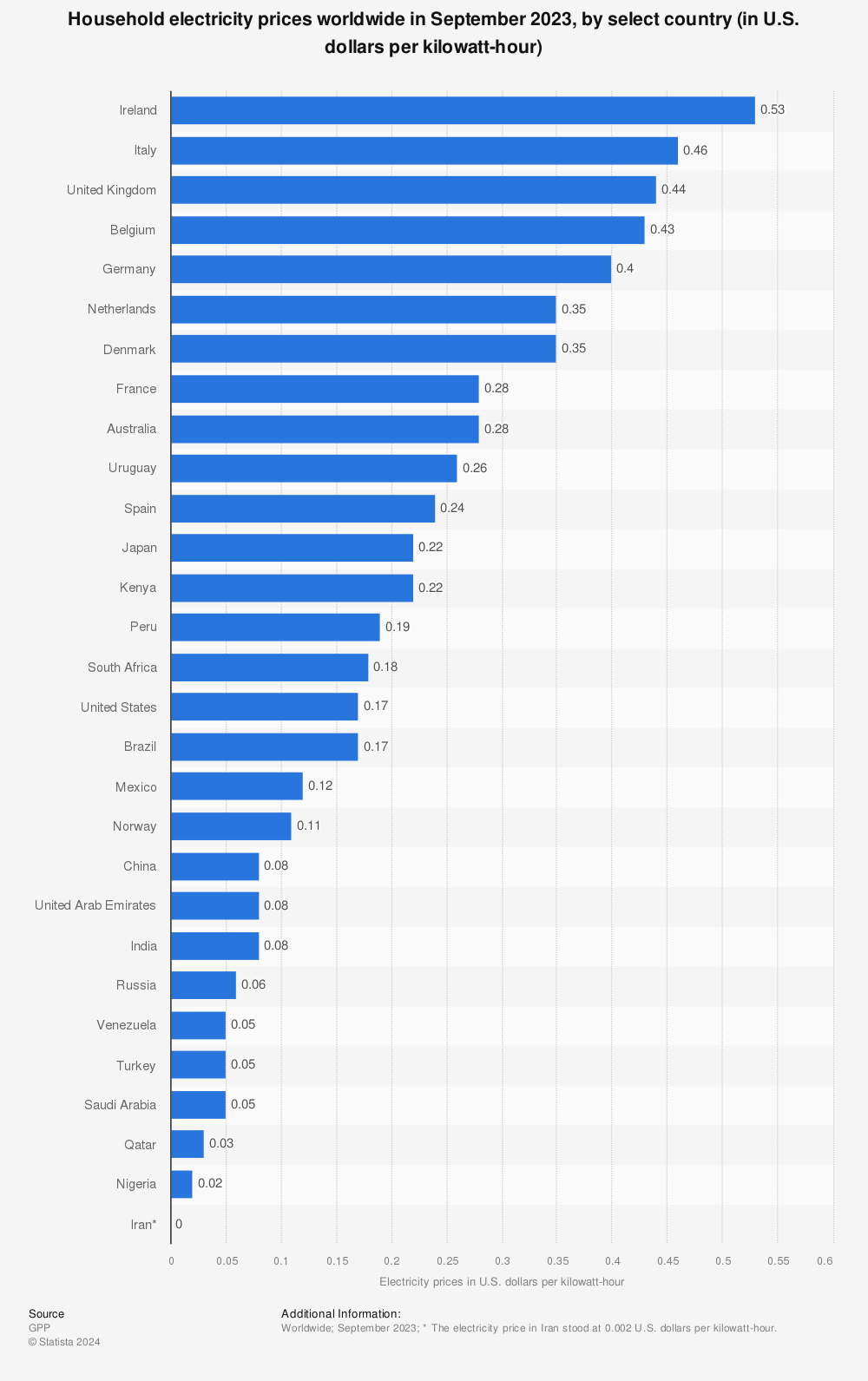
Find more statistics at Statista
The UK has some of the highest electricity prices in the developed world, and this has a direct impact on EV charging.
Two key factors shape the cost difference:
VAT Disparity
- Home electricity: 5% VAT
- Public EV charging: 20% VAT
This alone makes public EV charging structurally more expensive before a single kilowatt-hour of energy is delivered.
Electricity Pricing in 2025
Typical UK prices in 2025 look like this:
- Home off-peak tariffs: 7-12p per kWh
- Home standard tariffs: 22-28p per kWh
- Public slow/fast charging: 35-55p per kWh
- Public rapid charging: 65-95p per kWh
Add to that network fees, maintenance, payment processing, and commercial margins, and it becomes clear why public EV charging is no longer cheap.
Home EV Charging

Home EV charging has arguably been the single biggest enabler of electric vehicle adoption in the UK.
For motorists with a driveway, garage, or dedicated parking space, charging at home removes many of the inconveniences associated with petrol driving.
There are no queues, no fumes, no late-night detours to a filling station.
You simply park, plug in, and wake up with a charged car.
It also reduces dependency on oil companies and allows drivers to power their vehicles using renewable energy from suppliers such as Octopus Energy.
Home EV Charging Pros
Home charging offers a combination of cost savings and convenience that public charging struggles to match.
Charging overnight fits naturally into daily routines, requires no extra travel time, and offers predictable pricing.
It’s also gentler on the battery.
Slow overnight charging places less thermal stress on cells compared to repeated rapid charging, which can help long-term battery health.
Home EV Charging Cons
The biggest drawback is obvious: not everyone can do it.
Drivers without off-street parking, renters, and those living in terraced housing are often excluded.
Installation costs can also be a barrier, especially where electrical upgrades are required.
Charging speeds are slower than rapid public chargers, making home charging unsuitable for emergency top-ups or long-distance travel on its own.
Home EV Charging Costs
A typical EV consumes around 3-4 miles per kWh.
Using an off-peak tariff at 10p per kWh:
- Cost per mile ≈ 3p
- Annual cost (6,800 miles) ≈ £200
Even on a standard tariff at 25p per kWh:
- Cost per mile ≈ 7-8p
- Annual cost ≈ £500
That remains cheaper than petrol for most drivers.
Public EV Charging

Public EV charging has evolved rapidly.
Modern charging hubs now resemble service areas rather than car parks, offering cafés, toilets, Wi-Fi and places to work while your car charges.
Public charging is essential for:
- Long motorway journeys
- Drivers without home charging
- Emergency top-ups
But – all that convenience comes at a price!
Public EV Charging Pros
The biggest advantage is speed.
Rapid and ultra-rapid chargers can add 100-200 miles of range in under 30 minutes, making long-distance EV travel viable.
Public chargers also provide flexibility.
You can charge while shopping, working, or resting, rather than planning around home charging schedules.
Public EV Charging Cons
The downsides are numerous and widely reported by UK EV drivers.
Public charging is expensive, inconsistent, and sometimes unreliable.
Chargers may be out of service, blocked by petrol cars (ICE’d), or already in use, leading to charge rage.
Payment systems vary, apps can fail, and pricing is often opaque.
Safety can also be a concern, particularly when charging late at night in poorly lit or remote locations.
Public EV Charging Costs
Using realistic 2025 pricing:
- Fast charging (50kW): ~55p per kWh
- Rapid charging (100–150kW): ~75p per kWh
At 3.5 miles per kWh:
- Cost per mile ≈ 16–21p
- Annual cost (6,800 miles) ≈ £1,100–£1,400
At that point, EV running costs approach, and sometimes exceed, efficient petrol cars.
What Are the Alternatives?
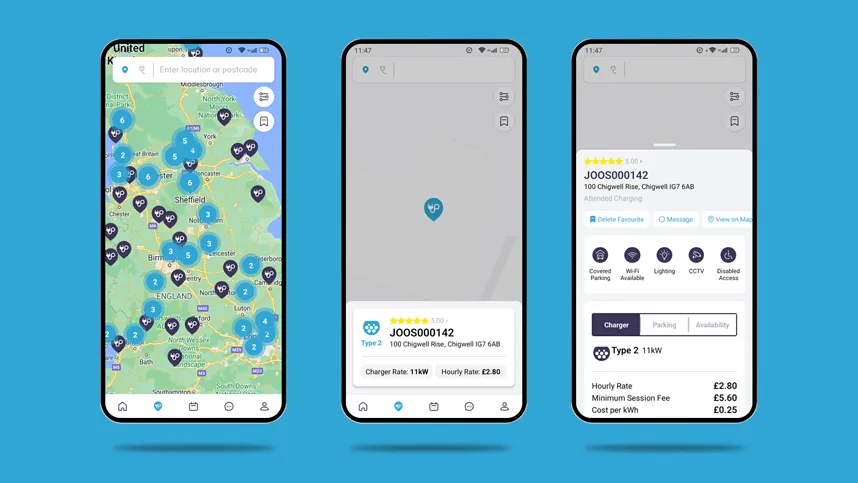
No Driveway? No Problem
For drivers without home charging, charger sharing platforms like Joosup provide a practical middle ground.
Joosup allows homeowners and businesses to share private chargers with nearby drivers.
Crucially, Joosup does not take commission from hosts, meaning prices are typically far lower than public charging at the same speeds.
This makes charger sharing ideal for overnight or destination charging, especially in urban and suburban areas.
Lamppost Charging
Lamppost chargers work well in theory, but in practice availability is inconsistent.
On terraced streets, parking directly beside “your” lamppost is often impossible, and charging speeds are slow.
They help some drivers, but they are not a universal solution.
Charging Gullies
Charging gullies allow cables to run across pavements safely, but they rely on drivers being able to park directly outside their property.
Even then, cables can still be exposed, damaged, or tampered with, and councils vary widely in approval.
Final Thoughts
So, home vs public EV charging – which is best?
For most UK drivers in 2025, home EV charging remains the cheapest, simplest, and least stressful option.
Public EV charging is essential for flexibility and long journeys, but it’s no longer cheap and should be used strategically rather than habitually.
For drivers without a driveway, the future lies in shared, community-based solutions rather than an over-reliance on expensive rapid chargers.
Apps like Joosup, combined with selective public charging, offer a more balanced and affordable way to live with an EV.
There is no single right answer, but understanding the real costs is the difference between loving EV ownership and quietly questioning it.