
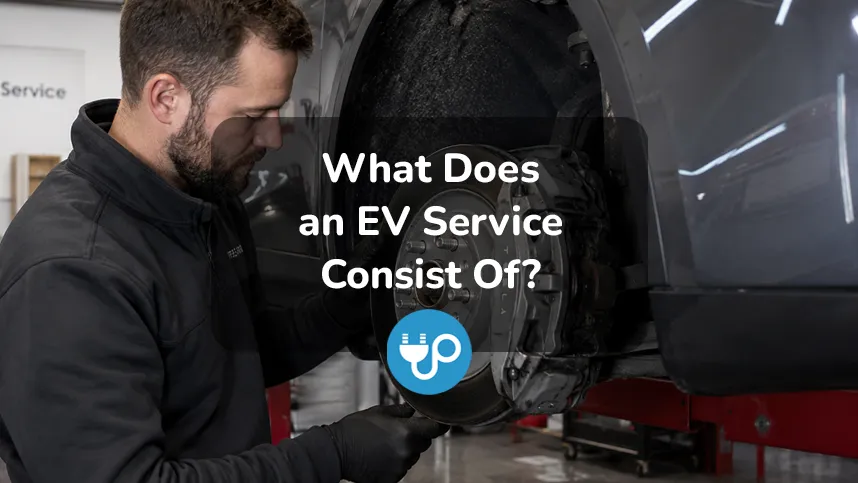
What Does an EV Service Consist Of?
An EV service is usually far simpler than servicing a petrol or diesel car because electric vehicles have fewer moving parts, no engine oil, and no traditional combustion engine components to maintain.
Instead of oil changes and exhaust inspections, an EV service focuses more heavily on software diagnostics, battery systems, tyres, brakes, suspension, cooling systems, and high-voltage safety checks.
That sounds reassuringly simple, but it also raises a fair question that many EV owners quietly ask after receiving a hefty dealership invoice:
If electric cars need less maintenance, why do some EV services still cost so much?
The truth sits somewhere in the middle.
Electric vehicles genuinely are cheaper and simpler to maintain over the long term, but they are also highly sophisticated pieces of technology that require specialist training, software, and safety procedures.
Understanding what actually happens during an EV service helps separate genuine maintenance costs from unnecessary upselling and gives owners a clearer picture of what they are really paying for.
Chapters
Key Takeaways
- EVs still need servicing, even though they require less maintenance than petrol and diesel cars
- Electric cars do not require oil changes, spark plugs, or exhaust repairs
- Most EV services focus on diagnostics, battery systems, brakes, tyres, suspension, and cooling systems
- Regenerative braking reduces brake wear, but brake corrosion can still become a problem
- EV servicing is often simpler mechanically, but specialist labour and software tools can still make it expensive
- Skipping servicing can lead to safety issues, reduced efficiency, and potential warranty complications
Do Electric Cars Need Servicing?
There’s a persistent myth that electric cars are effectively “maintenance free”.
It’s easy to understand where that idea comes from.
Compared to a petrol or diesel car, an EV eliminates a remarkable amount of mechanical complexity.
There’s no engine oil circulating around a combustion engine operating at thousands of revolutions per minute.
There’s no spark plugs igniting fuel, no fuel filters becoming clogged, no turbochargers spinning at extreme speeds, and no exhaust systems gradually corroding underneath the car.
That alone removes a large percentage of the routine maintenance associated with traditional vehicles.
However, electric cars are still heavy machines travelling at motorway speeds in all weather conditions.
Tyres wear down, suspension components take punishment from potholes, brake fluid absorbs moisture over time, and cooling systems still need monitoring.
Modern EVs also rely heavily on software and electronic systems that require periodic inspections and updates.
So while EVs absolutely require less maintenance, they still require servicing to ensure they remain safe, efficient, and reliable.
The important distinction is that EV servicing is less about repairing worn-out mechanical engine components and more about monitoring systems, checking safety-critical parts, and ensuring the vehicle’s electrical systems are operating correctly.
What’s Checked During an EV Service?
Diagnostics
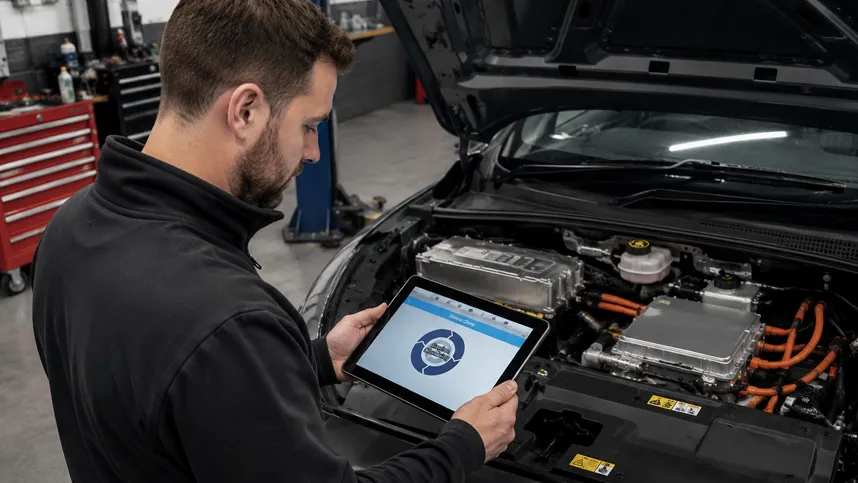
One of the biggest differences between an EV service and a traditional combustion-engine service is the importance of software diagnostics.
Modern electric vehicles are deeply software-driven.
Everything from battery management and regenerative braking to charging performance and thermal management is controlled electronically.
During servicing, technicians connect the vehicle to specialist diagnostic software which scans for fault codes, software irregularities, sensor problems, charging issues, and battery-related warnings.
In many cases, the most valuable part of an EV service is not a mechanic physically replacing parts, but rather a trained technician identifying issues before they become expensive problems.
This also explains why EV servicing is not always as cheap as some owners expect.
Dealerships and EV specialists must invest heavily in manufacturer-approved software systems, ongoing technician training, and high-voltage safety certification.
The actual servicing may involve less physical labour, but the technical expertise required is often higher.
Electric Motors
Electric motors are one of the most durable components fitted to any modern vehicle.
Unlike combustion engines, they contain relatively few moving parts and operate far more efficiently.
That means routine servicing rarely involves dismantling or repairing the motor itself.
Instead, technicians typically inspect surrounding systems such as electrical connections, mounting points, drive shafts, and cooling components.
In reality, most electric motors are expected to last for many hundreds of thousands of miles with minimal intervention.
It’s one of the reasons why EVs generally experience fewer catastrophic drivetrain failures than traditional vehicles.
Battery Health
The battery pack is the heart of an electric vehicle and also its most expensive component.
Naturally, this makes battery monitoring one of the most important aspects of EV servicing.
During a service, technicians may analyse battery performance data, charging behaviour, thermal management efficiency, and cell balancing information.
Some manufacturers also provide a battery “State of Health” report, although the level of detail varies considerably between brands.
It’s important to understand that battery degradation itself is normal.
Just like a smartphone battery slowly loses capacity over time, EV batteries gradually lose a small percentage of their usable capacity as they age.
Servicing cannot reverse that process, but it can identify abnormal deterioration or cooling system issues that might accelerate degradation unnecessarily.
Battery cooling systems are particularly important because temperature plays a major role in long-term battery health.
If cooling systems fail, battery performance and longevity can suffer.
Tyres
Tyres are often one of the biggest maintenance costs for EV owners, and many first-time owners are surprised by how quickly they can wear out.
Electric vehicles are typically heavier than petrol or diesel equivalents because of their battery packs, and they also deliver instant torque the moment the accelerator is pressed.
That combination places considerable stress on electric car tyres, especially if the car is driven enthusiastically.
An EV service therefore includes careful tyre inspections to check tread depth, wear patterns, sidewall condition, and tyre pressures.
Uneven wear can sometimes indicate alignment or suspension issues developing underneath the vehicle.
Tyres are particularly important for EV efficiency too.
Underinflated tyres increase rolling resistance, which directly reduces driving range.
Brakes & Brake Fluid
Many people assume EV brakes last forever because of regenerative braking.
While regenerative systems certainly reduce brake wear dramatically, they can actually create a different problem altogether.
Because physical brakes are used less frequently, brake discs and pads may corrode before they wear out, particularly in the UK’s damp climate.
Surface rust and sticking components are surprisingly common on low-mileage EVs.
Brake fluid also continues to absorb moisture over time regardless of whether the car is electric or petrol-powered.
If moisture levels become too high, braking performance can be compromised.
As a result, brake inspections remain an essential part of EV servicing even if brake pad replacement intervals are generally much longer.
Suspension
Electric cars place substantial weight on suspension systems due to their large battery packs.
Combined with Britain’s deteriorating road surfaces and potholes, suspension components still experience significant wear over time.
During servicing, technicians inspect bushes, dampers, springs, joints, and mounting points for signs of wear or damage.
This is one area where EVs are not necessarily easier on components than traditional vehicles.
In fact, the additional weight can sometimes accelerate suspension wear compared with lighter combustion-engine cars.
Cabin Filters
Although EVs do not need engine air filters, they still use cabin air filters to clean the air entering the passenger compartment.
Over time, these filters become clogged with dust, pollen, and airborne particles, reducing airflow and air quality inside the car.
Replacing them is usually straightforward, although dealership labour charges can occasionally feel excessive considering how quickly the job can often be completed.
Cooling System
One of the biggest misconceptions surrounding EVs is that they do not require cooling systems because they lack a combustion engine.
In reality, modern EV batteries rely on sophisticated thermal management systems to maintain safe operating temperatures during driving and charging.
Batteries perform best within a relatively narrow temperature range, particularly during rapid charging sessions.
Servicing may therefore involve inspecting coolant levels, pumps, hoses, heat exchangers, and associated components to ensure the battery cooling system is functioning correctly.
Without proper thermal management, charging speeds, efficiency, battery longevity, and even safety can be affected.
How Often Should You Service an EV?

Most manufacturers recommend servicing an EV every 12 months or after a certain mileage interval, typically somewhere between 10,000 and 20,000 miles depending on the vehicle.
For some owners, these intervals can feel overly cautious given the reduced mechanical complexity of electric vehicles.
There’s certainly an argument that some servicing schedules are designed partly to preserve dealership revenue as traditional servicing income declines.
However, annual inspections still serve an important purpose.
Software diagnostics, brake corrosion checks, tyre inspections, and battery cooling assessments are all preventative measures intended to identify small problems before they become expensive ones.
Even if an EV requires fewer replacement parts, it still benefits from regular professional oversight.
Do EVs Need Oil Changes?
No, and this is one of the clearest maintenance advantages electric vehicles have over petrol and diesel cars.
Because EVs do not use combustion engines, there’s no engine oil circulating around moving pistons, valves, and crankshafts.
That means:
- No oil changes
- No oil filters
- No oil contamination
- No engine lubrication servicing
This immediately removes one of the most common and recurring maintenance costs associated with traditional vehicles.
Some EVs do still use small amounts of lubricants or reduction gear fluids, but these systems are very different from engine oil systems and usually require minimal attention over the life of the vehicle.
Does EV Servicing Cost Less than Petrol and Diesel Servicing?

Yes, over the long term, EVs are generally cheaper to maintain than ICE vehicles..
But the picture is more complicated than many people expect.
Traditional petrol and diesel servicing involves frequent replacement of consumable components.
Oil changes alone quickly add up over years of ownership, and combustion engines naturally suffer greater wear because they operate under extreme heat and friction.
Electric cars eliminate much of that expense.
So why do some dealership EV services still cost £250, £350, or even more?
Part of the answer is legitimate.
High-voltage systems require specially trained technicians, diagnostic software subscriptions are expensive, and dealerships maintain high labour rates regardless of vehicle type.
But there’s also a growing perception among owners that some manufacturers are pricing EV servicing based less on actual maintenance requirements and more on preserving existing dealership business models.
In some cases, owners are paying premium prices primarily for inspections and software checks rather than major physical maintenance.
This is one reason why independent EV specialists are becoming increasingly popular.
Many offer more transparent pricing structures and focus on genuinely necessary maintenance rather than fixed-price dealership service packages.
Still, even if annual servicing costs sometimes feel frustratingly high, the overall lifetime maintenance costs of EVs generally remain lower than equivalent petrol or diesel vehicles.
What Happens If You Don’t Service an EV?
Skipping servicing entirely is rarely a good idea.
While an EV may continue driving perfectly normally for long periods without attention, small issues can quietly develop beneath the surface.
Brake corrosion, suspension wear, cooling system problems, and tyre deterioration can all worsen gradually if left unchecked.
More importantly, ignoring servicing schedules may create warranty complications.
Manufacturers can refuse certain warranty claims if servicing requirements have not been followed appropriately.
Regular servicing is ultimately less about maintaining a combustion engine and more about ensuring the entire vehicle remains safe, efficient, and electrically healthy.
Final Thoughts
Electric vehicles have dramatically simplified car maintenance, but they have not eliminated it entirely.
The traditional rituals of oil changes, spark plugs, exhaust repairs, and engine servicing are slowly disappearing, replaced instead by software diagnostics, battery monitoring, safety inspections, and preventative maintenance.
For many owners, this shift creates confusion because the visible maintenance workload feels much smaller while dealership invoices do not always shrink proportionally.
The reality is that EV servicing genuinely is simpler, but modern electric vehicles are also technologically advanced machines that require specialist knowledge and equipment to maintain properly.
As more independent EV specialists emerge and the market matures, servicing costs will likely become more transparent and competitive.
Until then, understanding what an EV service actually consists of is one of the best ways for owners to make informed decisions and avoid paying unnecessarily for work their vehicle simply does not need.